


I’m not ashamed to admit that I embrace “little treat” culture. For those unfamiliar, it’s the name given to the very human desire to, well, have a little treat now and then. Donald Trump has his Diet Coke button; my grandma has her Pinot Grigio; my dog has literal little treats; and I have books.
A couple of weeks ago, I went for an eye exam and new glasses at Warby Parker inside my local outdoor mega-mall. I hate going there, so I make it better for myself by parking outside the Barnes and Noble and walking through it to access the mall. A little treat.
On my way out, I stopped in the Arts & Crafts section to see if there were any new Watercolor books, or books about Rembrandt, or maybe a book about the moral life of Caravaggio—little treats.
What I found instead turned out to be much more than a little treat; it was, for me, a banquet of a sort I’d been unaware I was even hungry enough in that moment to consume.
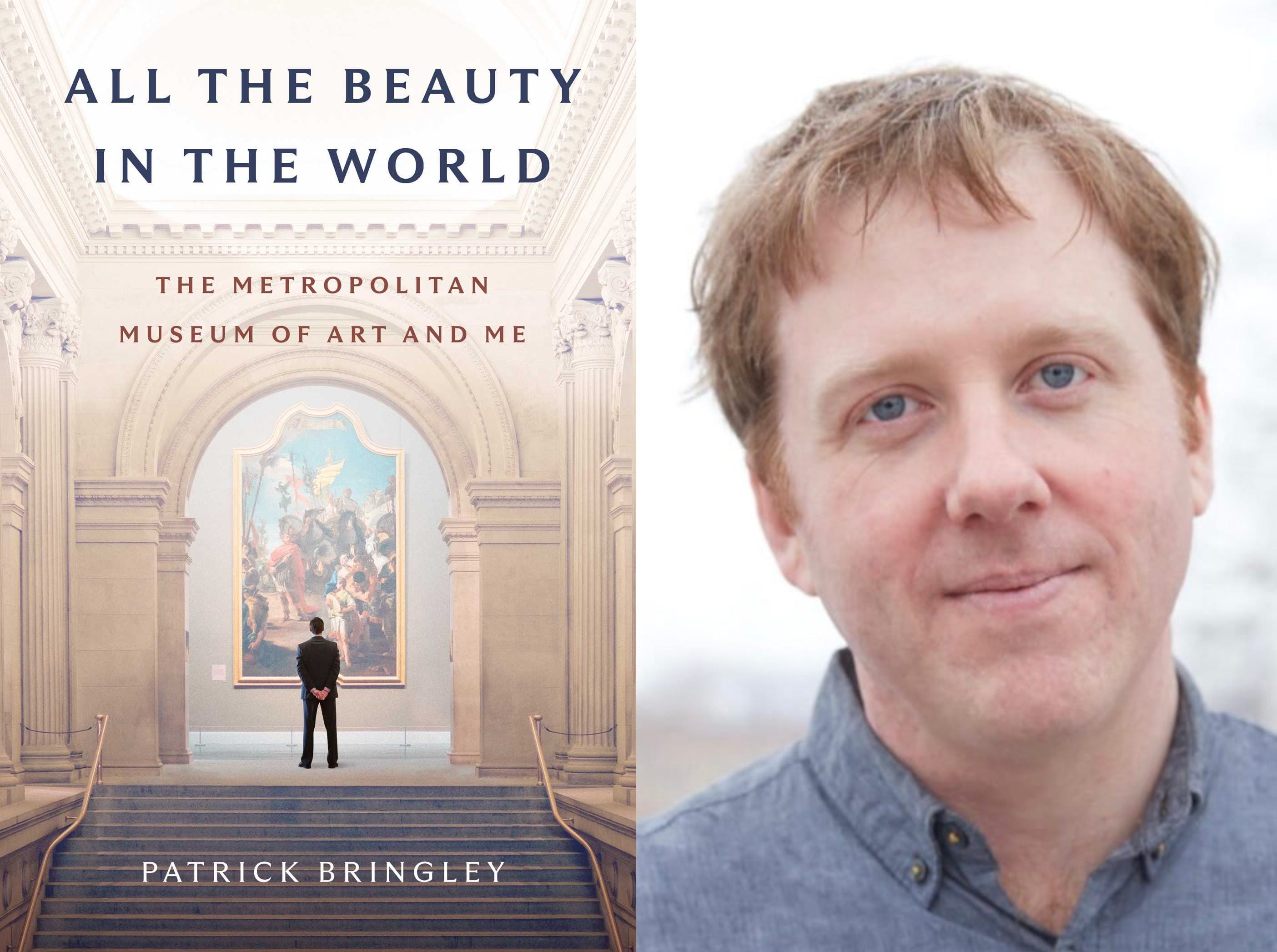
Patrick Bringley’s 2023 debut memoir, All the Beauty in the World: The Metropolitan Museum of Art and Me traces Patrick’s journey from a desk lackey at The New Yorker to a guard at New York’s Met, a change he acknowledges feels a bit backwards. Sitting alone at his New Yorker desk, albeit in the offices of one of the most famous publications in the world - and at a job that so many young writers would kill for - Patrick felt hemmed into a job with “narrow horizons.” He, like so many of us as we start a career, had gotten lost in delusions of grandeur at the surface level, but deep down he could not shake the feeling that he was faking it in the real world. He needed something far more human and with greater, more sincere access to the meaningful stuff of life.
Consider these reflections from early in the memoir:
Naturally, one of the first things I did when I started at the magazine was crack open a Word doc and attempt to write an article in the witty, urbane New Yorker style. I was obviously faking it, and I failed. But rather than take a lesson from that, I retreated to the safety of magical thinking.
It speaks well of me that I’m around so many accomplished people, I told myself, many of whom know my name! I have the business card of a serious, substantive person, so keep playing the game and I am sure to become one!
It took me almost three years to grasp an unwelcome paradox. If I were working a less “impressive” job, I would be…free to take big swings at whatever topic inspired me. Here in the big leagues, however, my thoughts were cramped and my ambitions were curiously small.
The office part of the job seemed also to have narrow horizons - ironically, nothing like what a museum guard enjoys. …
I smoked the occasional cigarette just to have a break, an excuse to stand down on the pavement and forget about penny-ante work concerns. Pigeons clucked, the world turned, it had nothing to do with me. For the few minutes I smoked, I was Huck Finn, a dropout, just regarding a bend of a river wider, deeper, and even less concerned with my opinion than I could say. So I said nothing. And felt sane. (48-49)
A major difference between memoir and autobiography is the way the story of one’s life is told. In autobiography, the reader gets a more or less chronological retelling of the events of the author’s life, maybe with sourced material and more objective reflections. Memoir also tells the story of a life, but instead of being told in a linear way the memoirist takes us in circles, or maybe ovals, or even sometimes ellipses, around a central event that becomes a looking glass for them and for us.
Patrick’s looking glass is his work at the Met. From the intimate vantage point of working as a guard, alone for hours with some of the most famous works of art in the world, he is able to sit before them and really let them into himself. Consequently, he leads us through the Met in much the same way. He takes the reader on a tour of the Met, and opens up these works and the worlds they came from and tells about himself along the way.
In the span of only 178 pages, Patrick walks us through his childhood on the southside of Chicago, his move to New York, his parents’ relationship, the death of his brother, falling in love and marriage, and the birth of his children. He likewise introduces us to the inner-workings of the Met, teaching us all the jargon we might need when we’ve woken up in our narrowed horizons and crave a job for ourselves at the museum.
I liked this book because it was just so human and so honest. There is a wry humility to Bringley’s writing style. He doesn’t write to us expecting us to know or care anything about art or the minutiae of the Metropolitan Museum. But Patrick, implicitly, subscribes to the psychologist Carl Rogers’ notion that while each of us have lived incredibly individual lives, we can relate on the level of shared experiences: what is most personal is also the most general.
My favorite chapter is the penultimate, “Days Work”. In it, Bringley tells the story of two artists whose work captivates him: the world famous Michaelangelo and the almost-unknown ladies of Gee’s Bend, Alabama whose handmade quilts are on display in the Met. The juxtaposition here is not lost on him; “Whereas Michaelangelo’s arrival at the Met was heralded by banners along Fifth Avenue, I haven’t so much as heard the words ‘Gee’s Bend’ until I am posted [in their exhibit].” (161)
Throughout this chapter, Bringley describes the Florentine artist’s arduous process of lying on his back, face to face for years with the Sistine Chapel ceiling, wondering why he’d said yes to this project; spreading plaster, painting over it, waiting for it to try, doing it again…
He tells us the difficulty of the early 20th-century South, of social inequalities and economic hardships. In this context Loretta Pettway and her sisters are, day after day and stitch after stitch, putting together something as beautiful, as mundane, as utilitarian, as transcendent as quilts.
Bringley ends the chapter this way:
I think to myself: maybe there is a lesson here, and it’s a funny one to be learning in a place as grandly cosmopolitan as the [Met]. Meaning is always created locally. The greatest art is produced by people hemmed in by circumstances, making patchwork efforts to create something beautiful, useful, true. Michaelangelo’s Florence…was in this way rather like Loretta Pettway’s Gee’s Bend. I’ll try not think anymore in terms of the ‘High Renaissance.’ I’ll think of a person spreading out a bit of fresh plaster, and painting it, and a little bit more, and painting it…(166)
Earlier in the book, Bringley reflects on what makes something “art”. He concludes that by and large the things we think of as the greatest art is just a representation of something so personal, so mundane, so usual that’s been captured in such a way that it’s far more beautiful than it has any right to be.
And that, I think, is the point of the author’s reflections throughout this incredible book. What is most personal is also the most general; meaning is always created locally, in the here and now of our little nowhere lives.
It’s true what they say, that life imitates art: because for those with eyes to see, life is far more beautiful than it has any right to be.
—
All the Beauty in the World: The Metropolitan Museum of Art and Me
Patrick Bringley
2023, paperback. 178 pages.
Simon and Schuster Publishers. More information here.