


In the Spring of 2017, 40 of my classmates from Mundelein and I spent just over 10 weeks living in the Holy Land. We spent 3 weeks in Bethlehem, 4 weeks in Galilee, and 3 weeks in Jerusalem. It probably goes without saying that the trip is one of the highlights of my life. I don’t remember who said it initially, but the idea that the Holy Land represents a sort of “fifth Gospel” has become deeply rooted in my mind and also in my desire for an ongoing relationship with that place. (It’s that desire that led to an openness in membership in the Equestrian Order of the Holy Sepulchre of Jerusalem, but that’s a post for another day)
It was always exciting in the seminary to go home with a guy from a different diocese for break, or to welcome brother seminarians to stay with me in Illinois. When you go to someone’s house, meet their family, drive the streets and see the places that formed them, the person starts to make a lot more sense. I remember several occasions meeting the parents and siblings of friends in the seminary and thinking, “ohhhhhhhhhh this guy makes way more sense now.”
Going to the Holy Land is a similar experience with Jesus, and I think that’s why a pilgrimage to Holy Land ranks among many people’s lists of most impactful memories. Even as late as mid-September 2023, a priest friend who leads pilgrimages there told me that the tourism business had more than rebounded from its COVID slump.
That is, of course, until October 7 and the brutal attack by Hamas in southern Israel that killed 1,033 civilians (of which only 765 have been positively identified as of earlier this week). The attack, of course, reawakened the mind of the West to a long and bitter conflict that has never been allowed to sleep in the consciousness and daily living of Palestinians and Israelis. It is hard for us in America to even imagine the details of the conflict in a way that goes beyond the basic facts, and even those are contested and nuanced. For the people in Palestine and Israel, the conflict that exists is much more than a dispute about land; it’s about culture, religion, economy, and family & ancestral ties to ancient soil.
Practically everywhere we went over those 3 months in the Holy Land, there were signs of the conflict between the two peoples and states.
The group of Orthodox Jews mocking a passing Palestinian woman near the Jaffa Gate in Jerusalem;
The Palestinian barista at a coffee shop in Jerusalem who, when she served coffee rather harshly to a man in a kippah and noticed me watching the encounter, said to me kurtly, “I hate Israelis.”;
Our bus backing up precariously on a very narrow street in Bethlehem as a group of Palestinian boys threw rocks at IDF officers…we turned away just in time to see the canisters of tear gas being thrown by the officers;
The random checkpoint controlled by the IDF inside Palestinian territory on the way from Bethlehem to Hebron, and the armed officers boarding our bus demanding passports and showing particular animus toward a classmate with Syrian heritage
The Jewish man bragging about the Jew-only roads into and out of the settlements near Bethlehem, making his journey to work in Jerusalem only 20 minutes;
Hearing from a Palestinian man whose commute to work in East Jerusalem was nearly 2 hours through checkpoints and traffic from a nearly identical starting point as the Jewish man.
The list goes on. The point is that this conflict is not something that had been brewing beneath the surface and only now has come back to life; the truth is that this is a conflict that goes much deeper and has created more mutual fomentation between Israel and Palestine than most of us in the West can comprehend. It can be difficult to talk about.
Real Conflict vs. the Social Media War
I’m no expert on the affairs of the Holy Land. The friars with whom I’m living in Washington have each spent years in the Holy Land, some for upwards of 30 years, immersed in the day-to-day of what’s going on there. The superior of our house was born and raised in Jerusalem, and still has family there.
I can virtually guarantee you that there are more people than you realize around you everyday with personal connections to Palestine and Israel, and no matter what “side” someone is on, there is true and legitimate grief, anger, and a whole host of other feelings, not to mention important questions that center less on the state of geopolitics and more on the status of their childhood homes, whether family members are dead or alive, and whether there might really ever be peace in the land that they love.
As someone who likes to say things, I naturally found myself thinking about what I might say about this whole situation. Then it hit me: why should I feel obligated to say anything at all? I’m not an expert, I’m not on the ground, I don’t have family there, I know virtually nothing about the current state of affairs over there.
This is a critique about social media more generally (again, perhaps a post for another time) but I think what we’re seeing with regard to the Israel/Hamas conflict is interesting: social media makes us think we know things, and makes us feel empowered to speak our minds about the things we think we know.
But social media has also made us, in the West, largely very silly minded. It’s fueled cancel culture, and it’s also fueled a loss of the ability for serious thought, and likewise has obliterated our ability to hold many things in tension at once. Grief over the loss of Israeli civilians does not disqualify me from supporting the people of Palestine; being intensely angry at Hamas does not also mean that I support everything the State of Israel says and does.
It’s very hard for the people with real skin in this game to be constantly bombarded by “statements” and arguments being made by people who until a few weeks ago could not locate Gaza City on a map.
Everybody pause, and tread lightly forward.
The best kinds of “takes” on the conflict have been coming from people who both acknowledge that they don’t have much to say, and who skip all the realpolitiking long enough to build on a common (and really, really human) nausea in the face of war coupled with a bewilderment at the way humans treat each other in this painful world below, and topped with a real, sincere desire for peace on earth. The best of this (that I’ve seen lately) came from Jacob Collier on Instagram:
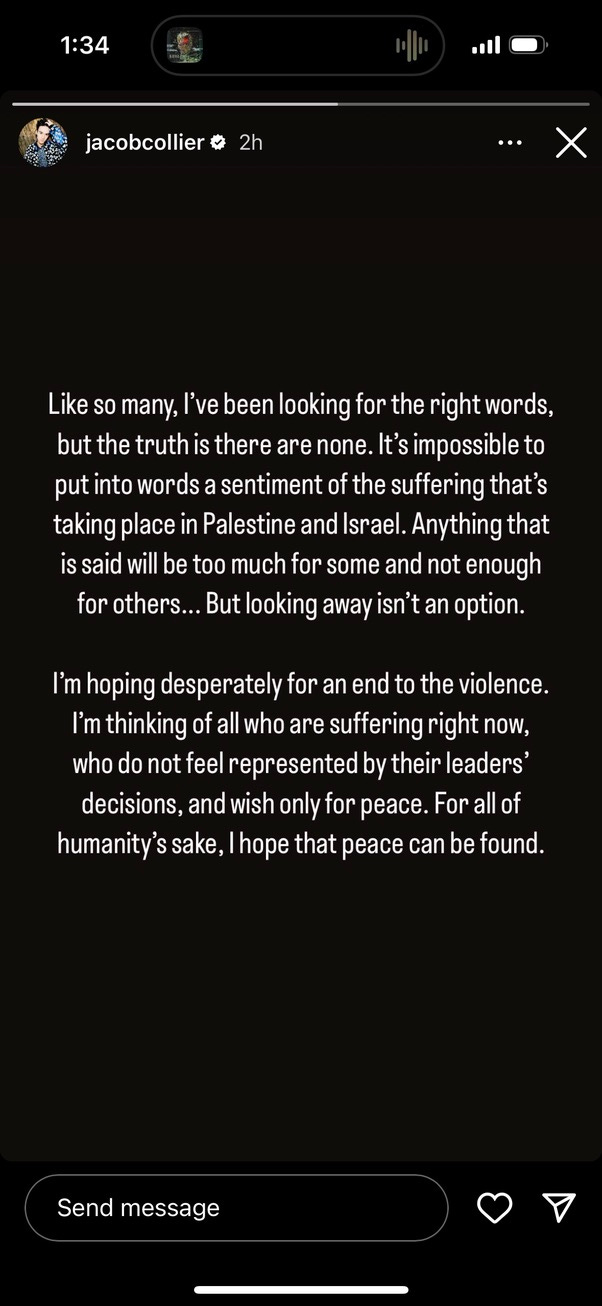
The Difficulty of Articulating a “Christian” Take
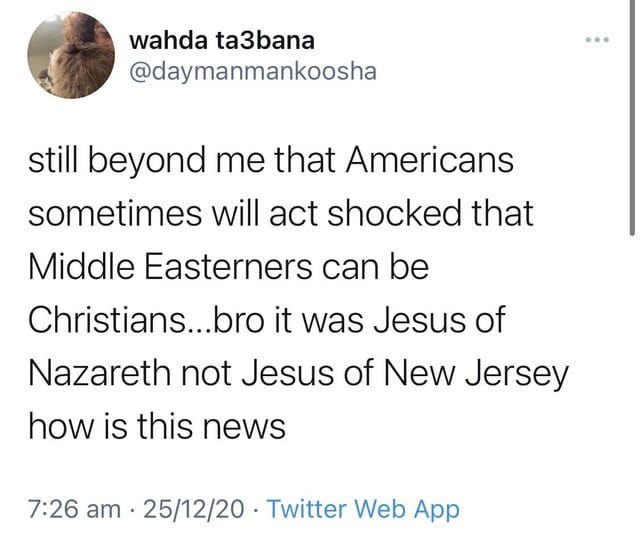
Last week sometime I arrived at the conclusion that if I were to say something about all of this it would have to be centered around how a Christian could respond to all of this. “Judaism” is a religion; “being from Israel” is not a religion. “Islam” is a religion, “Palestinian” is not. There is a Christian population in the Holy Land, and in Israel you will find Mass celebrated in Arabic, Hebrew, English, and French; the Catholic Patriarchate of Jerusalem oversees the work of the Church in Israel, Palestine, Cyprus, and Jordan. It’s possible to be a Palestinian Christian, and it’s also possible to be a Jewish Christian. (Consider the life of the French Cardinal [Aron] Jean-Marie Lustiger)
As I tried to formulate my thoughts on this topic, I kept stumbling across the work and pastoral leadership of the Latin Patriarch of Jerusalem, His Beatitude Pierbattista Cardinal Pizzaballa.
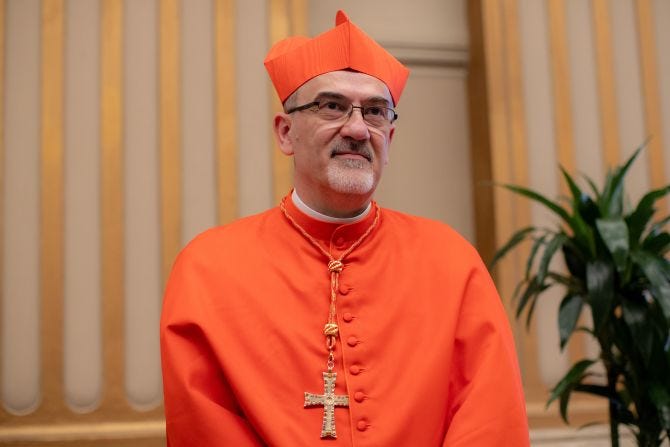
A native of northern Italy (the same region as Pope St. John XXIII), Cardinal Pizzaballa was ordained a Franciscan priest in 1990, and spent several years teaching Biblical Hebrew at the Franciscan Faculty for Biblical Science and Archaeology in Jerusalem. In 1999, he joined the Custody of the Holy Land, the branch of the Franciscan order that has overseen most religious sites in the Holy Land since the time of St. Francis’ visit there in 1219. Fr. Pizzaballa was charged with the pastoral care of Hebrew speaking Catholics, and eventually became the Custos of the Holy Land, overseeing the work of the Franciscan order there.
In 2016, he became the Apostolic Administrator of the Latin Patriarchate while the search for a new Patriarch was carried out, and in 2020 he was named as the Latin Patriarch of Jerusalem by Pope Francis. Only one week before the attack on southern Israel by Hamas, the Christian Churches in the Holy Land were filled joy as they celebrated +Pizzaballa’s elevation to the College of Cardinals in Rome.
From almost the very beginning of this new chapter in the conflict, Pizzaballa has been advocating for a cease fire, for humanitarian aid in Gaza, and for peace. He has called out both Hamas and Israel for violence against civilians, and has called for the immediate release of all hostages, particularly children. You can read the Statement of the Escalating Humanitarian Crisis in Gaza here.
A Call to the Charity and Making the Obvious Connection
Of course, any authentically Christian commentary on this situation will include a call for peace, for a ceasefire, for humanitarian aid, and for a release of hostages.
In his letter to the Diocese of Jerusalem, which includes all of Israel and Palestine, Cardinal Pizzaballa calls for all of those things, and goes a step further.
My conscience and moral duty require me to state clearly that what happened on October 7th in southern Israel is in no way permissible and we cannot but condemn it. There is no reason for such an atrocity. Yes, we have a duty to state this and to denounce it. The use of violence is not compatible with the Gospel, and it does not lead to peace.
From the Israeli perspective, so far so good. Many political and religious leaders released similar statements. Pizzaballa continues:
The same conscience, however, with a great burden on my heart, leads me to state with equal clarity today that this new cycle of violence has brought to Gaza over five thousand deaths, including many women and children, tens of thousands wounded, neighborhoods razed to the ground, lack of medicine, lack of water and of basic necessities for over two million people. These are tragedies that cannot be understood and which we have a duty to denounce…It is time to stop this war.
The Cardinal goes on not only to condemn the present situation but to make the connection for the rest of the world that is obvious to every person living in the midst of this decades-long conflict:
It is only by ending decades of occupation and its tragic consequences, as well as giving a clear and secure national perspective to the Palestinian people that a serious peace process can begin. Unless this problem is solved at its root, there will never be the stability we all hope for…We do not have the right to leave this task to others.
This was an extremely courageous thing for the Patriarch to write.
Words of a Christian Leader
Cardinal Pizzaballa is an incredibly intelligent academic, and by all accounts seems to be a sincere and integrated man; he is tasked with leadership that goes far beyond the spiritual duties of an Archbishop and carries out efforts of peace-making and diplomacy with grace.
But in doing so, he does not neglect his role as a spiritual father and shepherd. I really believe that his words of encouragement to the people of his diocese and to us in the West speak for themselves, so I will include them here nearly in their entirety.
Yet, I cannot live this extremely painful time without looking upward, without looking to Christ, without the faith that enlightens my view and yours on what we are experiencing, without turning our thoughts to God. We need a Word to accompany us…
“I have told you this so that you might have peace in me. In the world you will have tribulations, but take courage, I have conquered the world.” (John 16:33)
…This last word of Jesus is an encouragement. He does not say that He shall win, but that He has already won. Even in the turmoil to come, the disciples will be able to have peace. This is not a matter of theoretical irenic peace, nor of resignation to the fact that the world is evil, and we can do nothing to change it….Despite the evil ravaging the world, Jesus has achieved a victory, and established and new reality, a new order, which after the resurrection will be assumed by the disciples who were reborn in the Spirit.
It was on the cross that Jesus won: not with weapons, not with political power, not by great means, nor by imposing himself. The peace He speaks of has nothing to do with victory over others. He won the world by loving it…It is on this that we stake our faith today.
To have the courage of love and peace here, today…means making a personal commitment to justice…being convinced that it is still worthwhile to do all we can for peace…
I want, and we want, to be part of this new order inaugurated by Christ. We want to ask God for that courage. We want to be victorious over the world, taking upon ourselves that same Cross, which is also ours, made of pain and love, of truth and fear, of injustice and gift, of cries and forgiveness.
Now stop, and read that all again; let it soak in. The new order inaugurated by Christ is already here, and the only way it will ever be all that it can be is if we are committed to cooperating with the gift of the Cross so completely that it comes about.
But then! He writes something so personal, something so quintessentially fatherly and episcopal that I cannot but post it here:
I pray for us all, and in particular for the small community of Gaza, which is suffering most of all…Our thoughts go out to the 18 brothers and sisters who perished recently, and to their families whom we know personally. Their pain is great, and yet with every passing day, I realize that they are at peace…We are all with them, in prayer and concrete solidarity, thanking them for their beautiful witness.
My sheep hear my voice; I know them, and they follow me. (Jn. 10:27)
So Anyway
It’s important that we pray and discuss and do what we can to help the people of Gaza and of Israel; it’s important that we advocate for human rights regardless of culture or religion. But it’s also important that we remember who we are and where we sit while we do that praying and discussing and advocating. We cannot tolerate antisemitism, and we also cannot throw a blanket condemnation on all who protest for the rights of the Palestinian people. We cannot support Hamas, and we cannot support illegal occupation of Palestinian land.
And pray for those, like Cardinal Pizzaballa and so many others, who understand that the world as we know it is passing away and are left when the rubble settles to help nations, peoples, cultures, and families begin to put the pieces back together.
