


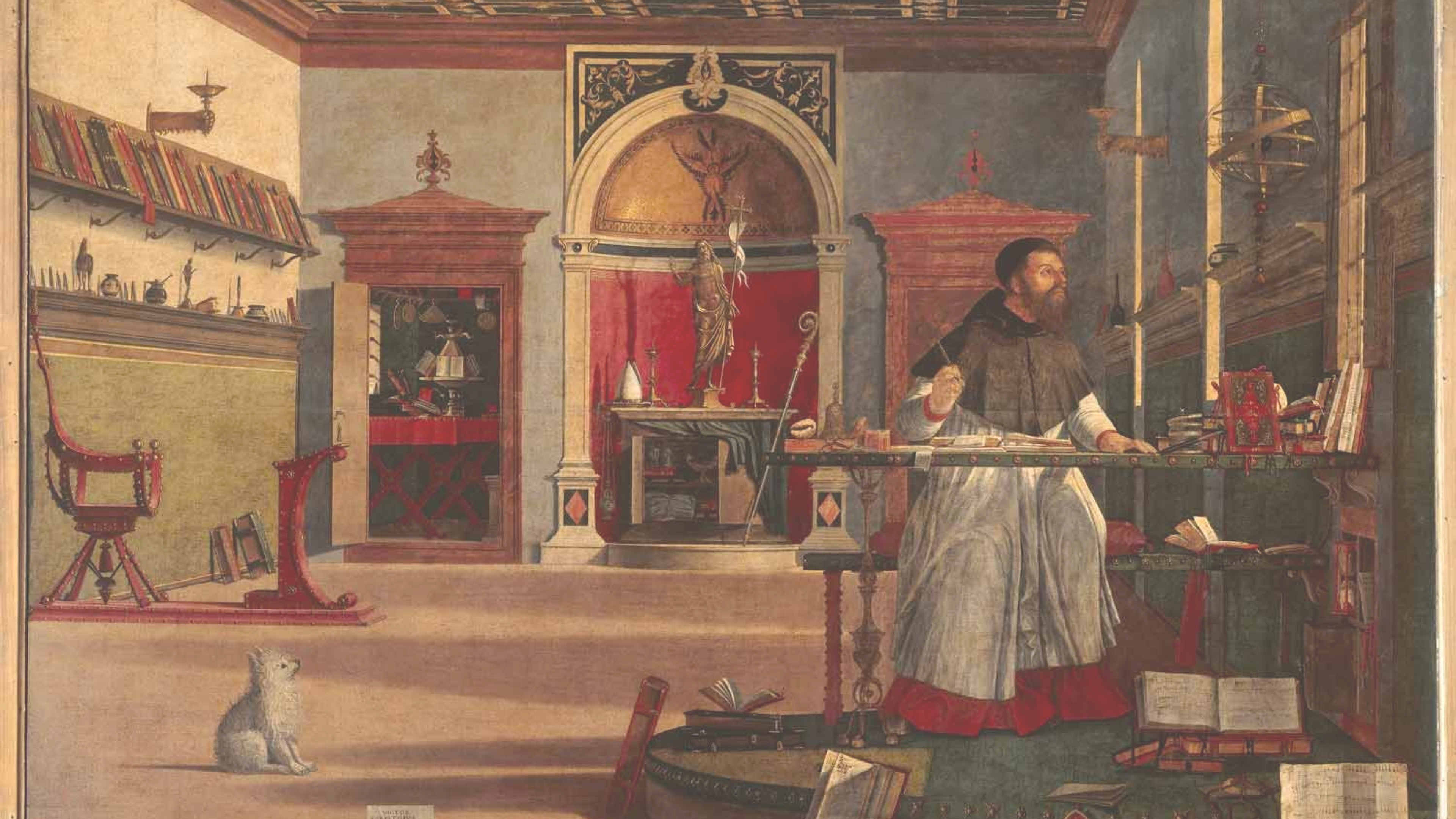
(Third installment in a series on the Rule of St. Augustine, which can help us understand the mindset and vision of Pope Leo XIV, who was formed according to this Rule.)
Leo’s Heart: Prayer That Shapes Community
"Be assiduous in prayer, at the hours and times appointed. In the oratory no one shall do anything but that for which it was intended and from which it got its name."
— Rule of St. Augustine, Chapter 3
If love of God and neighbor is the heart of Christian life, then prayer is the breath that keeps it alive. In Chapter 3 of his Rule, St. Augustine turns his attention to the role of prayer in shaping a common life. The community he envisions is not only one that shares goods and meals, but one that shares time before God.
Prayer, for Augustine, is not an individualistic escape. It’s what forms the soul of the community and roots it in God’s presence. That’s why he emphasizes both regularity and reverence: “Be assiduous in prayer… do nothing else in the oratory but pray.” In other words, let prayer be what prayer is meant to be—a time to open the heart to God, not to be distracted, performative, or rushed.
Augustine isn’t just enforcing good manners. He’s shaping a vision of communal life where the most important activity is listening—together—to the One who loves us. In a noisy world (Augustine’s world was noisy, too), this shared silence and attentiveness are more than devotional practices. They’re acts of resistance against self-centeredness, control, and anxiety.
Pope Leo, with his Augustinian roots, knows the importance of prayer not just as something we do, but as the place where we become who we are: children of the Father, brothers and sisters to one another. His early words and gestures already reflect this contemplative heart—an attentiveness to God's voice before rushing to speak his own.
For our parish, this chapter offers a gentle but clear challenge: Is prayer the center of our life together? A parish of shallow prayer is a parish at risk. Do we treat prayer as essential, or as optional—something squeezed in if there’s time? Do we enter the church building (our “oratory”) with reverence and expectation, or with distracted minds and hurried hearts?
Augustine’s Rule invites us to reclaim the sacred space of prayer in both form and focus. Not everyone can pray at set hours like a monastic community—but we can begin and end our day with simple moments of silence. We can arrive a few minutes early to Mass to quiet our hearts. We can pray together as families or ministries, not just for outcomes, but for communion with the Lord.
One small, practical suggestion: take time this week to pray not just for someone, but with someone—whether in your home, your small group, or right after Mass. Shared prayer isn’t just spiritually powerful; it’s deeply Augustinian. It builds the kind of unity that can’t be engineered, only received.
In Augustine’s vision, prayer isn’t a private luxury—it’s the common language of the Christian life. And when we speak that language together, our hearts are slowly shaped into the kind of unity that reflects the very life of God.