


Most Catholics are familiar with the image of the Sacred Heart because their grandmother had it hanging in the front hallway or it’s somewhere in their parish.
Some think of this one:
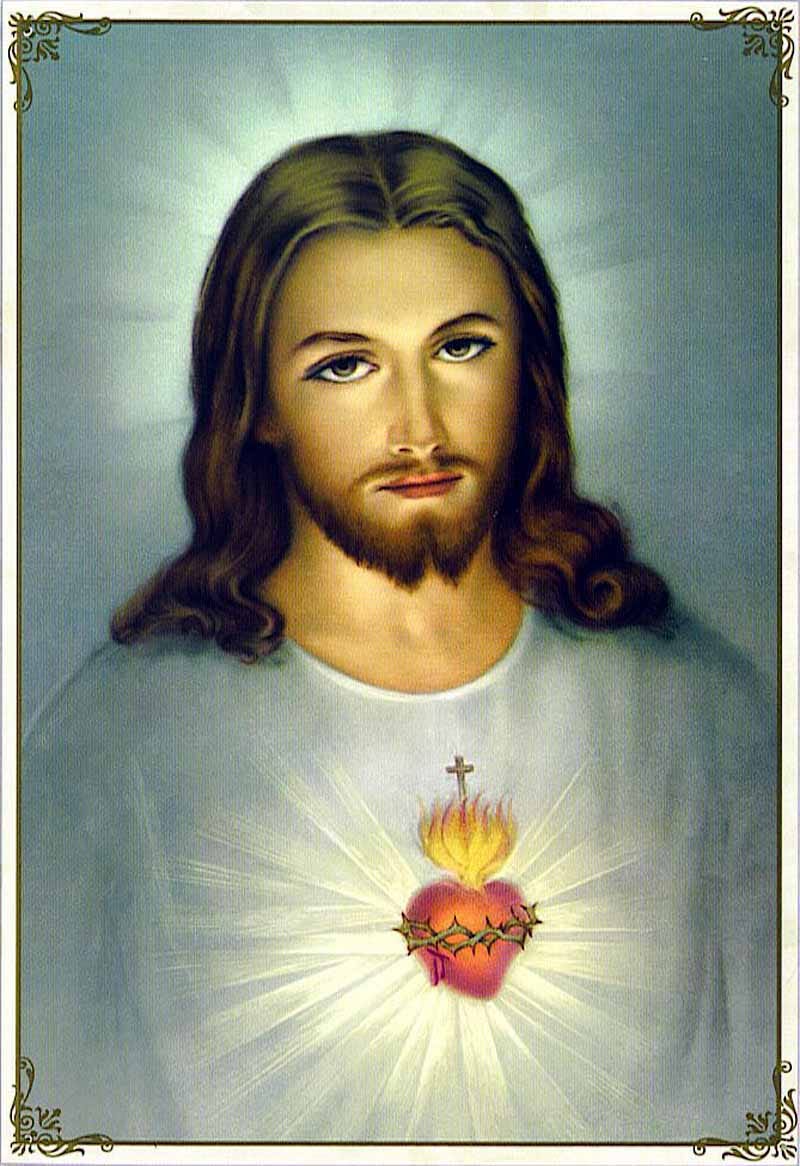
But I prefer this one:
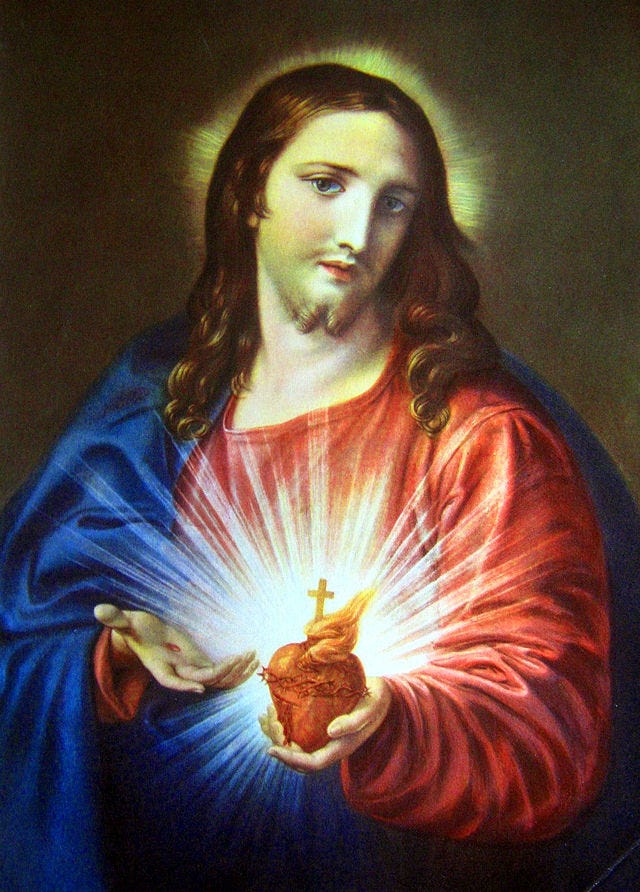
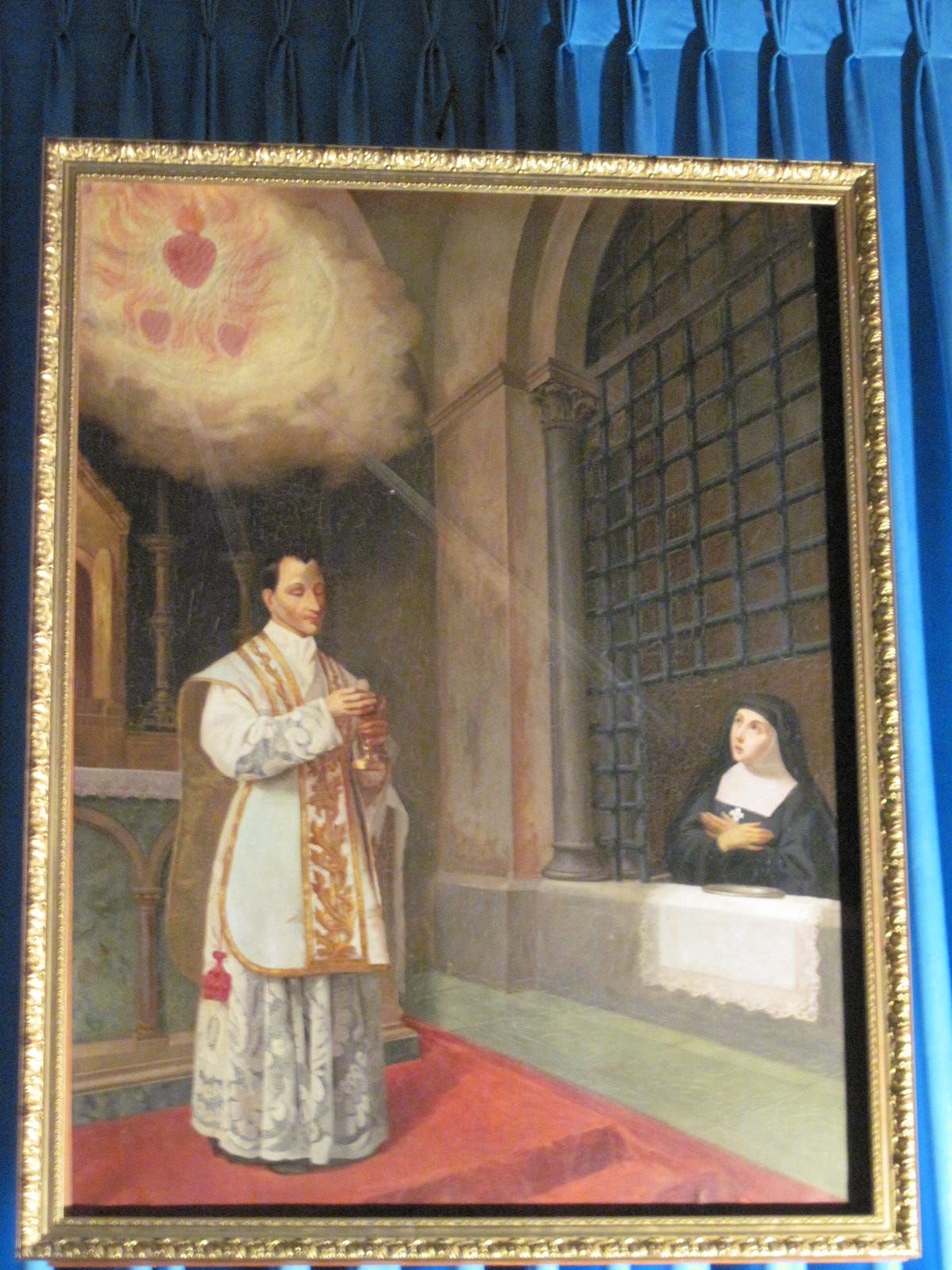
Either way, the idea of the Jesus offering his own heart in freedom, sparing nothing for the salvation of the world is edifying and inspiring. But when did this devotion begin? Most minds will go back to the little French town of Paray-le-Monial in the mid-17th century, to that Visitation Monastery and the quiet cell of Sister Margaret Mary, who told Fr. Claude la Colombiere everything about the curious visions of the Lord she’d been receiving, beginning on the feast of John the Evangelist, December 27th, 1673.
It’s true that the experience of St. Margaret Mary is perhaps the most well-known example of devotion the Sacred Heart, in part because of the fervent preaching of St. Claude la Colombiere between 1673 and his death in 1682, but the devotion to the Sacred Heart in no way originated in Paray-le-Monial or in the 17th century.
Who was the first Christian with a devotion to the Sacred Heart? I believe that St. Longinus – who Tradition tells us was the one who thrust the spear into the side of Jesus and was healed by the blood and water flowing from his side – was the second person with a devotion. The first, I think, was St. John the Beloved Disciple, who leaned his head against the heart of Jesus at the Last Supper.
After the crucifixion, St. John met a young Christian man from Smyrna named Polycarp, who he accompanied and taught about Jesus. Polycarp eventually became the Bishop of Smyrna. One day, Polycarp was out preaching, and the “gravity [with which] he everywhere came in and went out; what was the sanctity of his deportment, the majesty of his countenance, and what were his holy exhortations to the people,” so deeply impressed a young man that he was converted on the spot: we now know this man as St. Irenaeus.
St. Irenaeus was sent to the Roman province of Gaul in the second century, and while he was not the very first to preach Christ in France, he was certainly the most efficacious, and did so much to solidify the presence of the faith especially in south-central France, in the city of Lyon.
So from John the Apostle to Polycarp to Irenaeus, who brought this message to Lyon. And nearly 1500 years later, in the midst of the stronghold of Jansenism, the Sacred Heart of Jesus appeared to St. Margaret Mary on December 27th, 1673 – the feast of St. John the Apostle.
It’s true that the experience of St. Margaret Mary is perhaps the most well-known example of devotion the Sacred Heart, in part because of the fervent preaching of St. Claude la Colombiere between 1673 and his death in 1682, but the devotion to the Sacred Heart in no way originated in Paray-le-Monial or in the 17th century.
In 1895, and republished three more times as recently as 1953, the Carthusian Order published a series of devotions to the Sacred Heart dating as far back as the late 14th and early 15th centuries. The 15th century architecture of the Grand Chartreuse, motherhouse of the Carthusians, contains many decorative allusions to the Sacred Heart including this (below) crest in the keystone at the entrance of the monastery’s cloister, showing a pierced heart on a cross with nails and crown of thorns nearby.
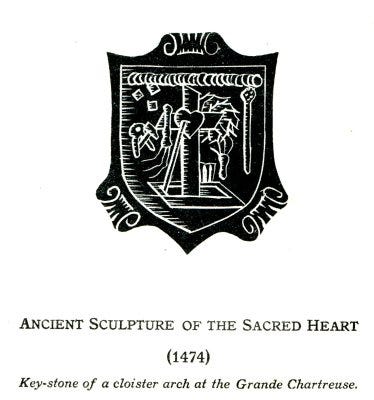
If you’re interested in reading some of the Carthusian devotions, you can find them here.
One very important player in the devotion to the Sacred Heart is a lesser known French saint, St. John Eudes. Interestingly, St. John Eudes was living at the same time as St. Margaret Mary and St. Claude la Colombiere but there isn’t evidence to suggest they knew each other. And yet, at the very same time, St. John Eudes was writing prolifically about devotion not only to Jesus’ heart but to the heart of Mary as well.
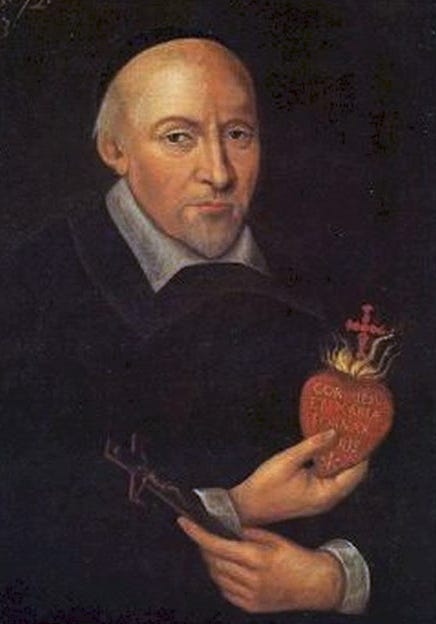
In 1648, Fr. John Eudes wrote the first Mass in honor of the heart of Mary, and in 1652 dedicated the chapel in his diocesan seminary to the Immaculate Heart of Mary and he is said to have established an altar to the Sacred Heart in the cathedral Church of Coutances, in Normandy. He was already advocating adding a Feast of the Sacred Heart of Jesus to the Church’s calendar in 1672, a year before St. Margaret Mary received the revelations of Sacred Heart in Paray-le-Monial. Interestingly, as part of his canonization proceedings in the 20th century, Pope St. Pius X named John Eudes the “father, doctor, and apostle of liturgical devotion to the hearts of Jesus and Mary.”
Holiness isn’t a competition, and ultimately it doesn’t really matter who decided to honor the heart of Jesus first. What is interesting to me is the fact that people from different time periods, different ecclesial situations, different historical contexts, and different places could all arrive at the same conclusion: that the heart of Jesus is exquisitely tender, burning with charity and mercy, and indeed spared nothing of itself so that all might know of his love.
He belongs to you, but more than that, he longs to be in you, living and ruling in you…He desires that whatever is in him may live and rule in you: his breath in your breath, his heart in your heart, all the faculties of his soul in the faculties of your soul, so that these words may be fulfilled in you: Glorify God and bear him in your body, so that the life of Jesus may be made manifest in you. (St. John Eudes)