


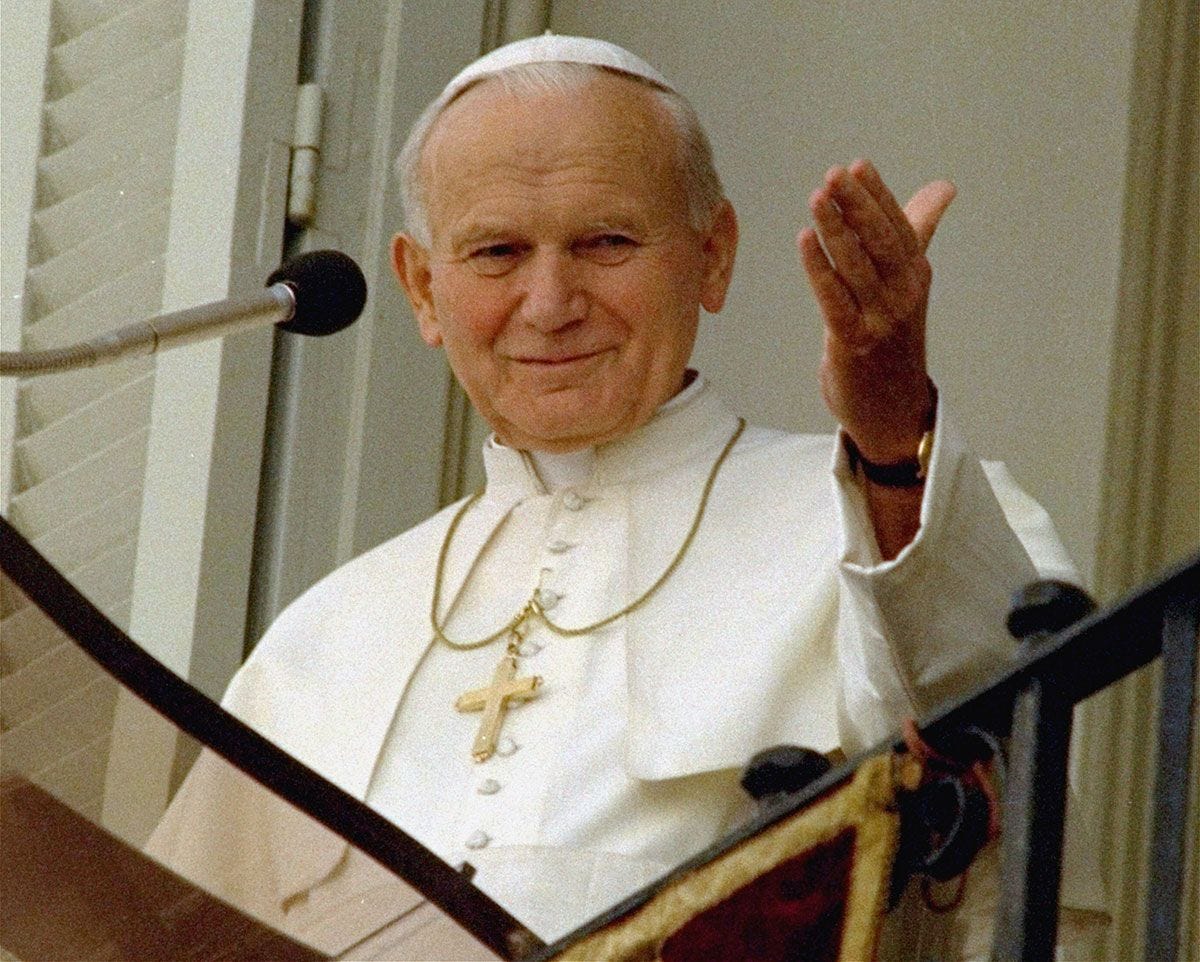
The first in an ongoing summary series of Pope St. John Paul II’s document Veritatis Splendor, “The Splendor of Truth”, first published in 1993 as an encyclical on Christian moral theology.
What Is Truth? (#’s 1-5)
Pilate’s question echoes across every age: “What is truth?” For some, it’s a rhetorical shrug. For others, a challenge. For believers, it’s an invitation—because truth isn’t just an idea. It’s a Person.
We live in a time when the word truth often raises eyebrows. Many say, “You have your truth, I have mine.” But this is like building a house on sand. Without a common foundation, without something stable and real, we drift. We become, in JPII’s words, “at the mercy of passing opinions” (1), carried along by what is easy, popular, or profitable.
John Paul II saw this already in the early 1990s. His concern wasn’t just cultural. It was deeply human. He had spent decades walking with young people, priests, families, and those in crisis. He saw how often the moral life is misunderstood: as if Christianity were just a list of dos and don’ts, or worse, a burden too heavy to carry.
But morality, he insists, is about happiness. It’s about living in the light, not the shadow. The Church doesn’t give us commandments to trap us; instead, they’re guardrails on the path to freedom. At the same time, the Pope doesn’t shy away from hard truths. Some things are always wrong. Not because the Church says so, but because they go against what it means to be truly human. The human heart was made for more.
In the first few paragraphs of Veritatis Splendor, we meet a Pope deeply in love with Christ, with the truth, and with each of us. This document is primarily an invitation to experience the fullness of the life of grace, and not a lecture from a stingy professor. He begins by reminding us that Jesus didn’t come to condemn the world, but to save it (John 3:17). And He saves us by revealing the truth about God, and about ourselves.
The ultimate Truth revealed by God is Jesus himself, who is “the way, the truth, and the life.” (Jn. 14:6) This Jesus is both the standard for the way forward in terms of how we act, and he’s also the light by which we see everything else.
In the weeks ahead, we’ll walk slowly through the rest of the encyclical—not as theologians, but as disciples. This is not a text for scholars only. It’s for parents, teens, teachers, those in various professions and walks of life; it’s for anyone who has ever wondered whether goodness is still possible, and whether the radiance of Christ’s Truth still shines.