January 24, 2000 was a sunny Monday morning. I remember my Mom coming to wake up my brother and me so we could get ready for school at East View. I was halfway through second grade, getting ready for my First Communion, still convinced I’d be the Pope someday.
There was a new kind of urgency about my Mom that morning.
“Come on, come on, look out the window; do you see the smoke over there? Over there above the trees?” There, across town, rising above the houses and trees we could see billowing smoke.
“That’s church.”
That’s church, indeed.
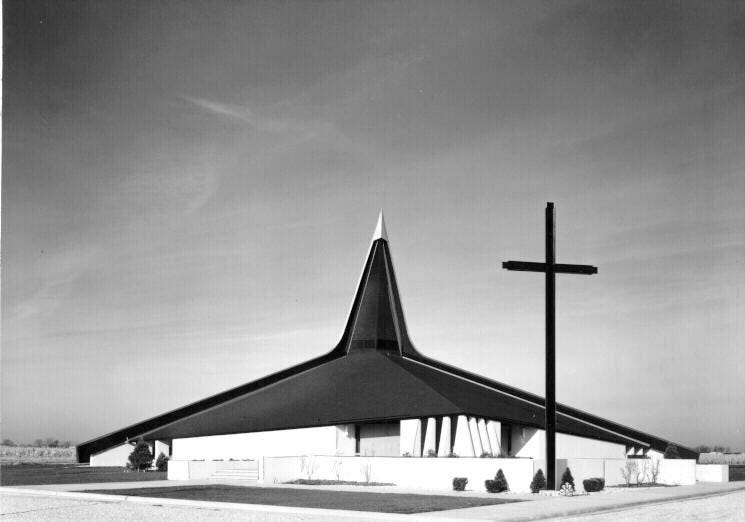
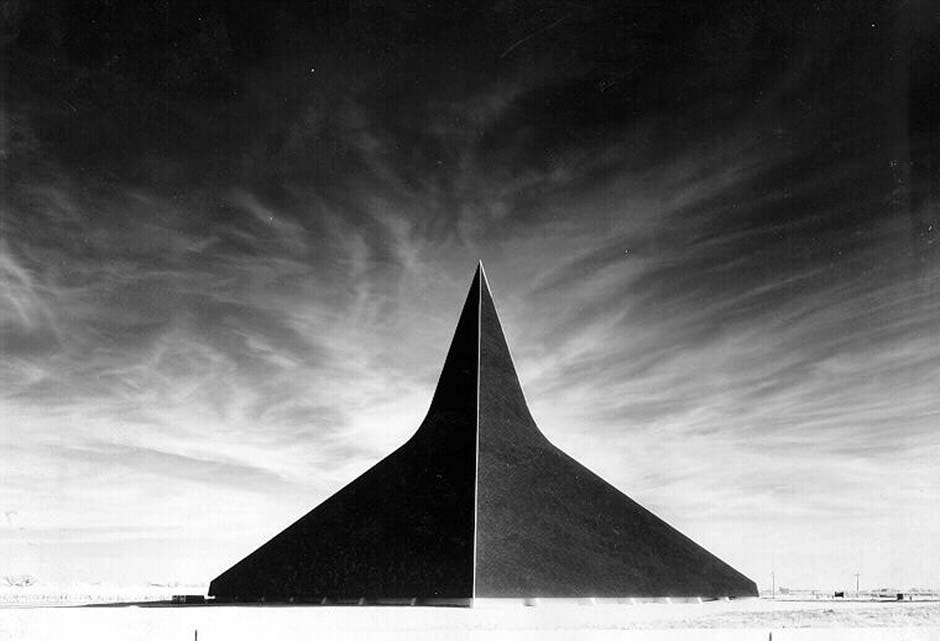
Now that I’ve become a fuddy-duddy snob of church architecture, there’s a part of me that looks at St. Anne’s as it was built in 1969 and has a hard time finding it beautiful. The parish’s website admits that Chicago newspapers called the new church “a real traffic stopper.” As you can see from the image below, I don’t think there was very much traffic to be stopped.
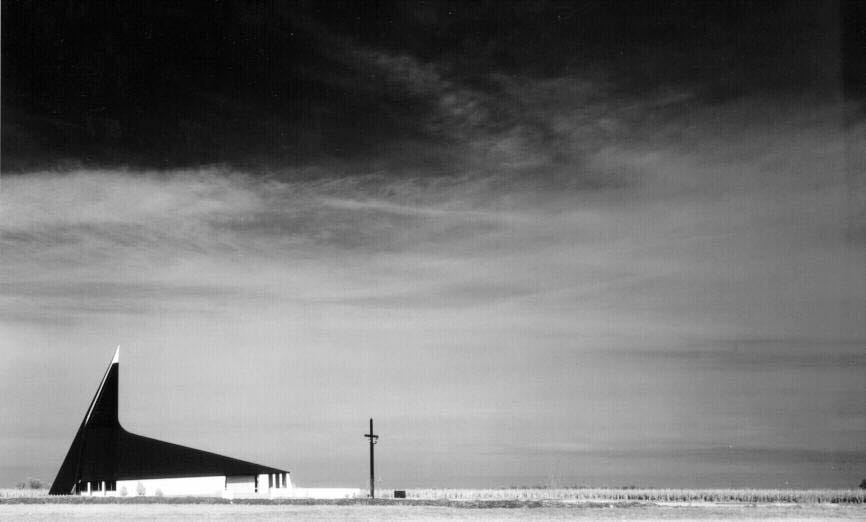
As a kid, I always thought the church reminded me of a witch’s hat or of a nun trying to stand up. The image that was always first in my mind was Miss Clavel from the children’s series Madeline.

The church, according to the architects, did in a modern way what every church’s design is supposed to do: lift the mind and heart to God, to draw us upward and outward from the things of earth and redirect our attention to the things of heaven. The critics noted that the “gradually rising ceiling reminds one of the vault of heaven arching over everything.” Instead of shooting up into the sky like other steeples, the steeple of St. Anne leaned forward somewhat, the sign of a “faith in motion.”
Regardless of what the professionals had to say - then or now - I look at St. Anne’s as a beautiful place, and I think to a lot of people in Oswego it was not only a beautiful place but it was their beautiful place. It’s our parish, and that was our church so whatever it looks like on the outside, it’s beautiful because we belong to it. That’s why when so many of us looked out our windows that morning, or turned on the news, or got the call from a friend, it was hard to believe.
The pastor, Fr. Dan Stempora, even said that when a runner saw the smoke billowing from the steeple just before six in the morning and came banging on the rectory door, he almost didn’t answer; then, before he stepped outside and looked for himself, he thought it might have been a joke.
Say what you want about it aesthetically, the reality is that on the morning of January 24, 2000, the design of St. Anne became it’s biggest liability.
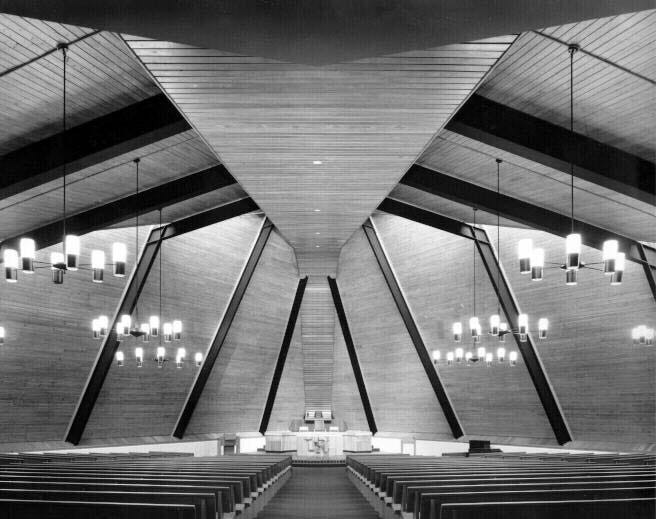
The Chicago Tribune article reported that the fire began in a supply closet behind the “cry room” at the back of the church. Maybe it was an electrical malfunction or maybe it was cleaning chemicals too close to the heater, but the fire spread out of that supply closet through a heating duct that ran straight up the middle of the church’s ceiling. In case it’s hard to tell from the picture above, the entire church was wood, and there were no windows at all. The duct became, essentially, a superhighway of flames, igniting the oak ceiling and spreading over to the walls and back down.
Because of the thickness of the roof and the total lack of windows, the Oswego fire chief said the building was virtually impossible to ventilate. These difficulties, coupled with an outdated fire detection system which meant the alarm was only raised by a runner with a good eye and some good will, the fire was burning for almost an hour by the time firefighters arrived. In total, 77 firefighters from Oswego, Aurora, and Bristol-Kendall helped battle the fire, and while almost everything of value was able to be salvaged (much of which was refurbished and is still being used in St. Anne’s new church), the building itself was deemed a total loss.
Here’s what I remember and why this day stands out to me:
Even as second graders, and even in public school, there was a lot of talk about the fire at school that day and in the days that followed. Our class and the third grade class next door, with help from our teachers Mrs. Kreitzer and Mrs. Emery, decided to organize a bake sale to help the rebuilding efforts and we raised (if memory serves…) just under $250. If you look in the book of donors in the main lobby at St. Anne’s, you can find “The 2nd and 3rd Grade Classes at East View Elementary” listed there.
My mom picked us up early from school that day and brought us over the church. Tons of people had gathered to watch the firemen do their work. I still can’t really believe this was allowed, but once the fire was out and most the water had stopped flowing inside, they allowed us to go in and see for ourselves what had happened. Since it was a Monday, we had all just been there the day before. What a completely different place. Puddles, broken glass, charred bits of wood, melted chandeliers and organ pipes. How totally different from the day before. That image is stuck in my mind.
But the thing I remember with the greatest frequency now as a priest is the image of Fr. Dan standing outside in the midst of the crowd, with his stocking cap and gloves, greeting everyone, hugging them, consoling them, allowing them to do the same for him. In that moment, he did what anybody would want of their pastor: he showed up, and he stayed there, and he watched it burn with us and assured us it would be rebuilt. He brought our parish community and our town together, and over the next three years we watched as something new took shape.
That’s the thing about priesthood, about the Church, and about the model Jesus left us. The bar is so low. Literally, all we have to do is show up, and the work of the Gospel can begin.
And it was the work of the Gospel that took place in that very interesting looking building, and it was the work of the Gospel that continued for three years in the parish hall, and it’s the work of the Gospel that happens now in that magnificent Cathedral of Kendall County.
It was the work of the Gospel for that priest to stand outside in the cold, while a second grader he probably didn’t even notice looked on, and was inspired. 18 years later, Fr. Dan vested me as a priest at my ordination.
After my ordination at the Cathedral in Joliet, I drove back to Oswego via the scenic route. I took Douglas Road from Rt 126, and at a certain point if you know where to look across the farms and fields, you can see two steeples now peeking out from the top of the line of trees.
“That’s church.”